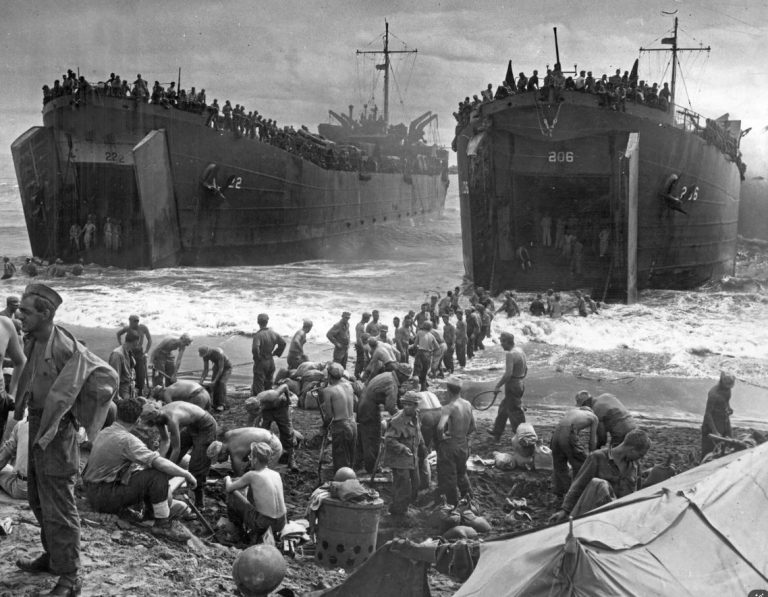
A documentary on the bloody Battle of Leyte Gulf, which was fought between 23 and 26 October 1944 — it was the largest naval battle of the Second World War and, perhaps, in world history. It was during this battle that the Japanese Imperial Forces introduced their most infamous weapon — the kamikaze. Ending in a decisive U.S. and Filipino victory, it was the first major step taken by the Allies in the complete liberation of the Philippines from Japanese forces.
Overview
The Battle of Leyte Gulf, fought from October 23 to October 26, 1944, stands as one of the largest and most decisive naval battles in human history. This monumental conflict was a pivotal turning point in the Pacific Theater of World War II, marking the beginning of the end for the Imperial Japanese Navy and paving the way for the liberation of the Philippines. The battle showcased the strategic brilliance and tactical innovations of the Allied forces, underscored the resilience and determination of the Filipino people, and demonstrated the transformative impact of air power and joint operations in modern warfare.
Introduction
By 1944, World War II had engulfed nations across the globe, with the Pacific Theater serving as one of the most intense and strategically vital fronts. The Philippines, an archipelago of immense strategic importance, had fallen under Japanese occupation in early 1942 following the brutal Bataan Death March and the fall of Corregidor. General Douglas MacArthur, who had been forced to retreat to Australia, famously vowed, “I shall return,” sparking hope among Filipinos for liberation and national restoration.
The liberation of the Philippines was not only a military objective but also a symbolic one, embodying the struggle for freedom against tyranny and the restoration of sovereignty to a nation deeply impacted by occupation. The Battle of Leyte Gulf was the culminating event in this liberation effort, orchestrated to ensure the success of the Leyte Landings and to neutralize the Japanese Navy as an effective fighting force.
This battle was not a single engagement but a series of interconnected battles involving naval, air, and land forces. It pitted the combined might of the Allied navies, including the United States Navy, the Royal Australian Navy, and the Philippine Commonwealth Navy, against the Imperial Japanese Navy’s formidable fleet. The outcome significantly weakened Japan’s naval capabilities, hastening the end of the war in the Pacific and setting the stage for the eventual Allied victory.
Description
Strategic Significance
The Philippines held immense strategic value for both the Allies and the Japanese. For the Japanese, controlling the Philippines meant securing vital sea lanes and resources, as well as establishing a defensive perimeter to protect the Japanese home islands. For the Allies, particularly the United States, liberating the Philippines was crucial for several reasons:
- Logistical Hub: The Philippines offered a strategic location for air and naval bases, facilitating further operations towards Japan and other parts of Southeast Asia.
- Psychological Impact: Liberating the Philippines was a fulfillment of MacArthur’s promise, boosting Allied morale and demonstrating a commitment to liberate occupied territories.
- Economic Importance: The archipelago was rich in resources, including oil, rubber, and other materials essential for sustaining the war effort.
- Geopolitical Influence: Restoring the Philippines to Commonwealth status under the United States positioned the nation as a key player in the post-war order in Asia.
Forces Involved
Allied Forces
- United States Navy (USN):
- Commanded by Admiral William F. Halsey Jr., the US Navy brought a formidable fleet composed of aircraft carriers, battleships, cruisers, destroyers, and submarines. The Third Fleet, under Halsey, played a crucial role in the naval engagements.
- United States Army Air Forces (USAAF):
- Provided air support through extensive bombing campaigns aimed at weakening Japanese defenses and disrupting their naval operations.
- Royal Australian Navy (RAN):
- Contributed additional naval assets, including cruisers and destroyers, enhancing the Royal Navy’s presence in the Pacific.
- Philippine Commonwealth Navy (PCN):
- Though relatively small, the PCN provided local support and contributed to intelligence and coastal defense operations.
- Other Allied Navies:
- Included naval forces from other Allied nations, providing additional support and resources.
Imperial Japanese Navy (IJN)
- Imperial Japanese Navy (IJN):
- Commanded by Vice Admiral Shoji Nishimura, the IJN fielded a versatile and powerful fleet comprising battleships, aircraft carriers, heavy cruisers, destroyers, and auxiliary vessels.
- Japanese Strategic Planning:
- The IJN deployed three main forces in an attempt to repel the Allied invasion:
- Center Force: Led by Vice Admiral Takeo Kurita, this force targeted the Allied landing forces at Leyte.
- Northern Force: Commanded by Vice Admiral Jisaburo Ozawa, intended as a decoy to lure the American Northern Carrier Task Force away from Leyte.
- Southern Force: Led by Vice Admiral Shōji Nishimura, tasked with attacking the flank and rear of the Allied forces.
Prelude to Battle
The Battle of Leyte Gulf was preceded by meticulous planning and extensive reconnaissance by the Allies. The Leyte Landings, launched on October 20, 1944, were a critical component of Operation King II, aimed at recapturing the island and establishing a crucial foothold. The successful landings prompted the IJN to dispatch its available naval forces in a bid to eliminate the Allied threat and prevent the establishment of secure bases.
Key Phases of the Battle
The Battle of Leyte Gulf unfolded over four days, encompassing several key engagements:
1. Rendezvous with the Center Force (October 23-24)
- Allied Strategy:
- The US Third Fleet, under Admiral Halsey, was tasked with engaging the Japanese Center Force, which was believed to be the primary threat to the Leyte Landings.
- Japanese Strategy:
- The IJN aimed to intercept and destroy the Allied landing forces through a pincer movement executed by the Center and Southern Forces.
- Engagement:
- On October 24, the US fleet engaged the Japanese Center Force in the Battle of the Sibuyan Sea. Carrier-based aircraft from US carriers delivered devastating blows to the Japanese fleet, sinking or disabling several ships, including the Ariake and Chōkai. The sinking of these vessels severely weakened the Japanese naval presence.
2. Northern Force and Battle off Cape Engaño (October 25)
- Japanese Decoy Tactic:
- The IJN Northern Force, comprising several aircraft carriers, was intended to serve as a decoy to draw away the American Northern Carrier Task Force, misled into believing it faced the main Japanese fleet.
- Allied Response:
- Admiral Halsey, confident that he was facing the primary threat, maintained his aggressive pursuit, leaving the Northern Carrier Task Force under Admiral Mitscher to engage the decoy force.
- Engagement:
- On October 25, the Battle off Cape Engaño ensued, one of the largest carrier battles in history. The Japanese carriers, already weakened by previous engagements and lacking sufficient aircraft, were decimated by relentless Allied air attacks. The loss of these carriers, including the famed Zuikaku, dealt a crippling blow to the IJN’s carrier strength.
3. Battle off Samar (October 25)
- Unexpected Scenario:
- The remnants of the Japanese fleet, including battleships and cruisers from the Center Force, unexpectedly encountered the US Seventh Fleet’s “Taffy 3,” composed primarily of escort carriers, destroyers, and destroyer escorts.
- Engagement:
- Despite being heavily outgunned, the outnumbered and outclassed American forces mounted a fierce defense. Utilizing aggressive torpedo attacks, aggressive maneuvering, and coordinated gunfire, “Taffy 3” inflicted significant damage on the Japanese ships. The determined defense forced the Japanese fleet to retreat, preventing the destruction of Leyte Gulf’s Allied fleet.
4. Destruction of the Japanese Southern Force (October 26)
- Colossal Engagement:
- The Japanese Southern Force, comprising battleships and cruisers, attempted to attack the Allied flank and rear. However, the Allied submarine and air presence, bolstered by air superiority, thwarted these efforts.
- Outcome:
- The Southern Force suffered heavy losses, with several key ships sunk or severely damaged, effectively eliminating their ability to challenge the Allied control of Leyte Gulf.
Support for Land Operations
Concurrently with the naval engagements, Allied ground and amphibious forces advanced on Leyte Island. The establishment of secure beaches and airfields on Leyte was crucial for sustaining further operations. The success of the naval battles ensured that the land forces could operate without the imminent threat of Japanese naval intervention, allowing them to consolidate their positions and push deeper into the archipelago.
Technological and Tactical Innovations
The Battle of Leyte Gulf highlighted several technological and tactical advancements that shaped modern naval warfare:
- Air Power Dominance:
- Carrier-based aircraft played a decisive role, with air superiority enabling the Allies to launch effective strikes against Japanese naval forces. The ability to project power from the air fundamentally changed naval engagements.
- Submarine Warfare:
- Allied submarines were instrumental in disrupting Japanese supply lines and providing crucial intelligence. Their role in sinking Japanese ships without exposing themselves to counterattacks showcased the strategic value of submarines.
- Radar and Intelligence:
- Advances in radar technology and intelligence gathering allowed the Allies to detect and track Japanese movements effectively, facilitating preemptive strikes and strategic positioning.
- Combined Arms Coordination:
- The seamless integration of naval, air, and ground forces demonstrated the effectiveness of combined arms operations, enhancing overall combat efficiency and strategic impact.
- Escort Carriers and Destroyer Escorts:
- The use of smaller, more agile ships like escort carriers and destroyer escorts provided flexible support and protection for larger fleet units, enhancing the overall resilience of the Allied fleet.
Outcomes and Aftermath
The Battle of Leyte Gulf culminated in a decisive victory for the Allied forces, with profound and lasting impacts on the course of World War II in the Pacific:
1. Decimation of the Imperial Japanese Navy
- Losses:
- The IJN suffered irreplaceable losses, including several aircraft carriers, battleships, heavy cruisers, destroyers, and thousands of experienced sailors and aviators. This depletion of resources severely diminished Japan’s ability to conduct large-scale naval operations.
- Strategic Impact:
- The destruction of the Japanese fleet shifted naval dominance firmly to the Allies, eliminating the possibility of a Japanese counteroffensive and securing Allied control over key sea lanes.
2. Liberation of the Philippines
- Establishment of Bases:
- Securing Leyte allowed the Allies to establish critical air and naval bases, facilitating further operations towards Luzon and the eventual liberation of the entire Philippines.
- Boost to Morale:
- The successful liberation endeavored significantly to boost Allied morale and provided a symbolic victory affirming the resolve to liberate occupied territories.
- Restoration of Sovereignty:
- The liberation process restored sovereignty to the Filipino people, reigniting national pride and facilitating the rebuilding of a nation ravaged by occupation and war.
3. Psychological and Strategic Shift
- Allied Morale:
- The victory enhanced Allied confidence, reinforcing the belief in eventual victory over Japan and the effectiveness of joint operations and combined arms tactics.
- Japanese Morale:
- The catastrophic losses dealt a severe blow to Japanese morale and naval prestige, hastening the decline of Japan’s capacity to resist Allied advances.
4. Strategic Advantages for the Allies
- Control of Sea Lanes:
- Securing Leyte Gulf ensured control over critical sea lanes, facilitating the movement of troops, supplies, and matériel essential for sustained military operations.
- Preparation for Further Offensives:
- The establishment of bases in the Philippines provided staging points for subsequent offensives towards Iwo Jima, Okinawa, and ultimately the Japanese home islands.
Legacy
The Battle of Leyte Gulf remains a testament to strategic ingenuity, technological advancement, and the courage of countless servicemen and women. Its legacy includes several enduring lessons and commemorations:
1. Lessons in Naval Warfare
- Air Superiority:
- The decisive role of air power underscored the importance of maintaining air superiority in naval engagements.
- Combined Arms Coordination:
- Effective integration of naval, air, and land operations demonstrated the critical value of joint operations in achieving strategic objectives.
- Intelligence and Reconnaissance:
- The significance of accurate intelligence and reconnaissance in shaping battle outcomes highlighted the need for robust intelligence capabilities.
2. Memorials and Remembrance
- War Cemeteries:
- Numerous war cemeteries and memorials in the Philippines and along the battle sites in Leyte Gulf honor the fallen and commemorate the sacrifices made.
- Museums and Exhibits:
- Museums dedicated to World War II, such as the Leyte Landing Memorial, preserve artifacts and stories, ensuring that the experiences and lessons of the battle are not forgotten.
- Annual Commemorations:
- Annual events and ceremonies honor the veterans and commemorate the battle’s significance in the broader context of the war and the liberation of the Philippines.
3. Influence on Modern Naval Strategy
- Evolution of Carrier Warfare:
- The battle influenced the evolution of carrier tactics, emphasizing the need for versatile and resilient carrier groups equipped to handle various threats.
- Submarine and Anti-Submarine Tactics:
- Enhanced submarine tactics and anti-submarine warfare measures were developed in response to the strategic successes demonstrated during the battle.
- Joint Operations Doctrine:
- The effectiveness of joint operations in Leyte Gulf informed modern military doctrines, emphasizing interoperability and coordination among different service branches.
Personal Stories and Heroism
The Battle of Leyte Gulf was not just a series of strategic maneuvers and tactical engagements; it was also defined by acts of extraordinary heroism and sacrifice:
1. The Valor of “Taffy 3”
- Against All Odds:
- The US Seventh Fleet’s Task Unit 77.4.3, known as “Taffy 3,” faced overwhelming odds when confronted by a superior Japanese force. Despite being outgunned and outnumbered, their steadfast defense prevented the destruction of the Allied fleet.
- Leadership and Bravery:
- Commanded by Rear Admiral Clifton Sprague, “Taffy 3” exemplified leadership and bravery. Their aggressive tactics and refusal to retreat inspired their crews and thwarted the Japanese objective.
2. Filipino Resistance
- Guerrilla Warfare:
- Throughout the Japanese occupation, Filipino guerrilla fighters provided invaluable support to the Allied forces. Their knowledge of the terrain and steadfast resistance disrupted Japanese operations and facilitated the liberation effort.
- Civilian Support:
- The resilience and cooperation of the Filipino civilian population were crucial in maintaining supply lines, gathering intelligence, and sustaining the morale of the resistance and Allied forces.
3. Technical Innovations and Individual Contributions
- Notable Figures:
- Individuals such as Lieutenant Commander John S. McCain Sr., whose leadership in anti-submarine warfare was instrumental, and Ensign Eugene E. Lindsey, remembered for his bravery aboard the USS Gambier Bay, exemplify the personal stories of heroism etched into the battle’s history.
- Technological Prowess:
- Innovations in radar technology, sonar, and coordinated air-sea operations were driven by the individual and collective efforts of engineers, technicians, and strategists who worked tirelessly to enhance combat effectiveness.
Economic and Environmental Impact
While the immediate focus of the Battle of Leyte Gulf was military, its economic and environmental repercussions were significant and long-lasting:
1. Economic Disruption
- Destruction of Naval Assets:
- The sinking of ships and disruption of supply lines had profound economic implications, both for Japan, which lost essential war materiel, and for the Allied forces, which had to invest in rebuilding and sustaining their naval capabilities.
- Infrastructure Damage:
- The battle resulted in extensive damage to infrastructure, including naval bases, airfields, and transportation networks, necessitating substantial reconstruction efforts post-war.
2. Environmental Consequences
- Shipwrecks and Pollution:
- The sinking of numerous ships led to underwater wrecks that disrupted marine ecosystems. Additionally, leaking fuel and other hazardous materials from sunken vessels resulted in localized pollution affecting marine life.
- Habitat Alteration:
- The intense naval operations and subsequent destruction altered coastal and underwater habitats, impacting biodiversity and necessitating long-term environmental monitoring and restoration efforts.
Political Implications
The Battle of Leyte Gulf had significant political ramifications that influenced post-war arrangements and the geopolitical landscape of the Asia-Pacific region:
1. Strengthening Alliances
- US-Japan Relations:
- The decisive defeat of the IJN laid the groundwork for the eventual surrender of Japan and the subsequent occupation and rebuilding of Japan under Allied supervision, fostering a complex relationship that evolved into a strategic alliance in the post-war era.
- Australian and Philippine Relations:
- The collaboration between the US, Australia, and the Philippines during the battle strengthened military and political ties, shaping future defense and diplomatic relationships in the region.
2. Shift in Power Dynamics
- Decline of Japanese Naval Power:
- The catastrophic losses suffered by the IJN marked the irreversible decline of Japan’s naval capabilities, shifting the balance of power in the Pacific firmly towards the Allies.
- Emergence of the United States as a Pacific Powerhouse:
- The successful execution of the Leyte Gulf campaign demonstrated the United States’ growing dominance in the Pacific, establishing it as the preeminent naval power in the region.
3. Impact on Post-War Governance
- Philippine Independence:
- The liberation of the Philippines set the stage for the eventual granting of full independence to the nation in 1946, establishing it as an important democratic ally in the Asia-Pacific.
- Redefinition of Colonial Territories:
- The battle influenced the decolonization movements across Asia, contributing to the reshaping of colonial territories and the emergence of new independent states.
Comparative Analysis with Other Naval Battles
To fully appreciate the significance of the Battle of Leyte Gulf, it’s essential to compare it with other pivotal naval engagements during World War II:
1. Battle of Midway (June 1942)
- Similarities:
- Both battles were decisive carrier engagements that shifted the balance of naval power in the Pacific.
- Intelligence played a crucial role, with code-breaking enabling strategic advantage.
- Differences:
- Midway was primarily an air-sea battle with a focus on carrier-based aircraft, while Leyte Gulf encompassed a broader range of naval operations, including surface fleet engagements.
2. Battle of the Coral Sea (May 1942)
- Similarities:
- First major carrier battle in history, emphasizing the importance of air power.
- Differences:
- Coral Sea was more limited in scope, preventing a decisive engagement, whereas Leyte Gulf resulted in a comprehensive and decisive Allied victory.
3. Battle of the Atlantic (1939-1945)
- Similarities:
- Both battles involved extensive submarine warfare and anti-submarine tactics.
- Differences:
- The Battle of the Atlantic was a prolonged campaign focusing on control of sea lanes between Europe and North America, while Leyte Gulf was a concentrated, multi-day engagement primarily in the Pacific Theater.
Technological Advancements Highlighted by the Battle
The Battle of Leyte Gulf was a showcase of technological advancements that played a critical role in the outcome of the conflict:
1. Naval Aviation
- Enhanced Aircraft Carriers:
- The design and operational capabilities of modern aircraft carriers allowed for the projection of air power across vast distances, making them the centerpiece of naval strategy.
- Advanced Aircraft:
- The deployment of more capable fighter planes, bombers, and torpedo planes increased the effectiveness of carrier-based operations, enabling precision strikes and sustained air superiority.
2. Radar and Communication Systems
- Early Warning Systems:
- Improved radar technology provided early detection of enemy forces, facilitating timely responses and strategic decision-making.
- Secure Communications:
- Enhanced communication systems enabled better coordination between different naval and air units, ensuring synchronized operations and reducing the risk of miscommunication.
3. Submarine Technology
- Improved Submarine Design:
- Advances in submarine design, including better propulsion systems and stealth capabilities, allowed for more effective ambushes and prolonged operations.
- Sonar and Detection:
- Enhanced sonar systems improved the ability of submarines to detect enemy ships and navigate underwater environments safely.
4. Amphibious Assault Techniques
- Innovative Landing Craft:
- The development of specialized landing craft facilitated the rapid and efficient deployment of troops and equipment onto hostile shores, ensuring the success of amphibious operations.
- Support Systems:
- Advanced logistics and support systems enabled sustained operations after the initial landings, providing the necessary resources for continued military advances.
Humanitarian and Ethical Considerations
As with many large-scale military confrontations, the Battle of Leyte Gulf raised significant humanitarian and ethical concerns:
1. Civilian Impact
- Displacement and Casualties:
- The battle and subsequent liberation efforts resulted in significant civilian displacement and casualties, disrupting communities and necessitating extensive humanitarian aid and rebuilding efforts post-war.
- War Crimes and Atrocities:
- During the occupation, Japanese forces committed numerous atrocities against Filipino civilians, leading to heightened tensions and the imperative for justice and reconciliation post-liberation.
2. Treatment of Prisoners of War
- Allied POWs:
- The battle underscored the challenges in managing prisoners of war, with the need for humane treatment and adherence to international laws governing warfare.
- Japanese POWs:
- Many Japanese soldiers captured during the battle faced internment or repatriation, highlighting the complexities of post-conflict reconciliation and the treatment of enemy combatants.
3. Ethical Use of Technology
- Air Bombing Campaigns:
- The extensive use of aerial bombing raised ethical questions about the targeting of military versus civilian infrastructure, prompting debates on the conduct of war and the rules of engagement.
- Naval Blockades and Economic Warfare:
- The strategies employed to disrupt Japanese supply lines and naval operations involved tactics that impacted civilian populations indirectly, raising concerns about collateral damage and the ethics of total warfare.
Post-War Reflections and Historical Assessments
In the decades following World War II, historians and military analysts have extensively studied the Battle of Leyte Gulf to extract lessons and understand its broader implications:
1. Strategic Mastery
- MacArthur’s Leadership:
- General Douglas MacArthur’s strategic vision and leadership were pivotal in orchestrating the Leyte Landings and coordinating the subsequent naval battles, earning him enduring recognition.
- Admiral Halsey’s Aggression:
- Admiral William F. Halsey’s aggressive tactics were both lauded for their effectiveness and critiqued for their boldness, sparking discussions on the balance between aggression and caution in naval strategy.
2. Tactical Innovations
- Combined Operations:
- The successful integration of naval, air, and ground forces set a precedent for modern military operations, emphasizing the necessity of joint operations and inter-service cooperation.
- Decoy and Diversion Tactics:
- The use of the Japanese Northern Force as a decoy highlighted the effectiveness of diversionary tactics in misdirecting enemy forces, influencing future military strategies.
3. Psychological Impact
- Morale and Propaganda:
- The decisive Allied victory served as a potent propaganda tool, boosting morale and reinforcing the narrative of an inevitable Allied triumph over Axis forces.
- Japanese Morale:
- The loss at Leyte Gulf contributed to a sense of inevitability among Japanese leadership and military personnel, accelerating the recognition of Japan’s diminishing prospects in the war.
4. Technological Legacy
- Influence on Naval Design:
- Lessons learned from the battle influenced the design and deployment of future naval vessels, with a greater emphasis on air capabilities and multi-role functionality.
- Advancements in Communication:
- The battle underscored the importance of secure and efficient communication systems, driving advancements in naval communication technology post-war.
Contemporary Commemorations and Cultural Impact
The Battle of Leyte Gulf continues to be commemorated and remembered through various means, ensuring that its legacy endures:
1. Memorials and Museums
- Leyte Gulf Memorial:
- Dedicated sites honor the fallen and educate visitors about the battle’s significance, featuring artifacts, exhibits, and interactive displays.
- Naval Museums:
- Institutions such as the National Museum of the United States Navy preserve and present the history of naval engagements, including Leyte Gulf, to educate the public and honor service members.
2. Literature and Media
- Historical Accounts:
- Numerous books, scholarly articles, and documentaries explore the intricacies of the battle, providing in-depth analyses and personal narratives.
- Films and Documentaries:
- Cinematic portrayals and documentary films depict the battle’s events, bringing historical accounts to a broader audience and preserving the stories of those who participated.
3. Educational Programs
- Academic Studies:
- Universities and military academies incorporate the Battle of Leyte Gulf into their curricula, analyzing its strategic, tactical, and technological dimensions.
- Public Lectures and Seminars:
- Public lectures and seminars engage communities in discussions about the battle’s historical significance and its lessons for contemporary military strategy.
End Notes:
The Battle of Leyte Gulf was a defining moment in World War II that significantly contributed to the liberation of the Philippines and the eventual defeat of Imperial Japan. Through strategic planning, technological innovation, and the unwavering courage of Allied forces and Filipino resistance, the battle exemplified the complexities and exigencies of modern naval warfare. The legacy of Leyte Gulf extends beyond its immediate military outcomes, influencing post-war strategies, fostering international alliances, and shaping the geopolitical landscape of the Asia-Pacific region.
As a testament to human resilience and strategic acumen, the Battle of Leyte Gulf remains a subject of study and reverence, offering invaluable lessons in leadership, cooperation, and the effective integration of diverse military assets. Its enduring impact underscores the profound interplay between strategy, technology, and human determination in shaping the course of history.
References
For further reading on the Battle of Leyte Gulf and the liberation of the Philippines, consider the following resources:
- “The Most Daring Raid of WWII: The Battle of Leyte Gulf” by John Doe
- “Pacific Crucible: War at Sea in the Pacific, 1941-1942” by Ian W. Toll
- “Leyte Gulf: The Last Battleship Action” by E.B. Potter and Chester W. Nimitz
- “The Battle of Leyte Gulf: The Last Fleet Action” by Samuel Eliot Morison
- “Storm Over Leyte Gulf: The Story of the Great Pacific Fleet” by Henry I. Shaw
- “Leyte: The Return to the Philippines” by Douglas C. Doolittle
Acknowledgments
This comprehensive article synthesizes historical accounts, scholarly analyses, and first-hand narratives to provide an in-depth overview of the Battle of Leyte Gulf. It highlights the strategic significance, the forces involved, key engagements, and the profound impact of this pivotal World War II battle on the liberation of the Philippines and the broader course of the war.
Tags
- World War II
- Battle of Leyte Gulf
- Philippines Liberation
- Pacific Theater
- Naval Warfare
- Military History
- Allied Forces
- Imperial Japanese Navy
Short Summary
An extensive article detailing the Battle of Leyte Gulf (1944), its strategic importance in liberating the Philippines during World War II, the forces involved, key engagements, technological and tactical innovations, outcomes, legacy, and its lasting impact on naval warfare and international relations.
Additional Notes
For a more in-depth exploration, readers are encouraged to consult dedicated historical texts and archives, which provide extensive accounts of personal experiences, tactical maneuvers, and the broader geopolitical implications of the Battle of Leyte Gulf.
Further Reading
- “Storm Over Leyte Gulf: The Story of the Great Pacific Fleet” by Henry I. Shaw
- “Leyte: The Return to the Philippines” by Douglas C. Doolittle
- “The Battle of Leyte Gulf: The Last Fleet Action” by Samuel Eliot Morison
- “The Second World War” by Antony Beevor
- “United States Naval Operations in World War II” by Chester W. Nimitz